The core factors influencing the energy consumption of industrial large fans' motors
The energy consumption of industrial large fans' motors is influenced by multiple factors, which can be mainly classified into three categories: the performance of the motor itself, the operating conditions, and the usage environment. Reasonable control of these factors can significantly enhance energy efficiency and reduce operating costs. The performance of the motor itself is the foundation, and different types of motors have obvious differences in energy consumption.
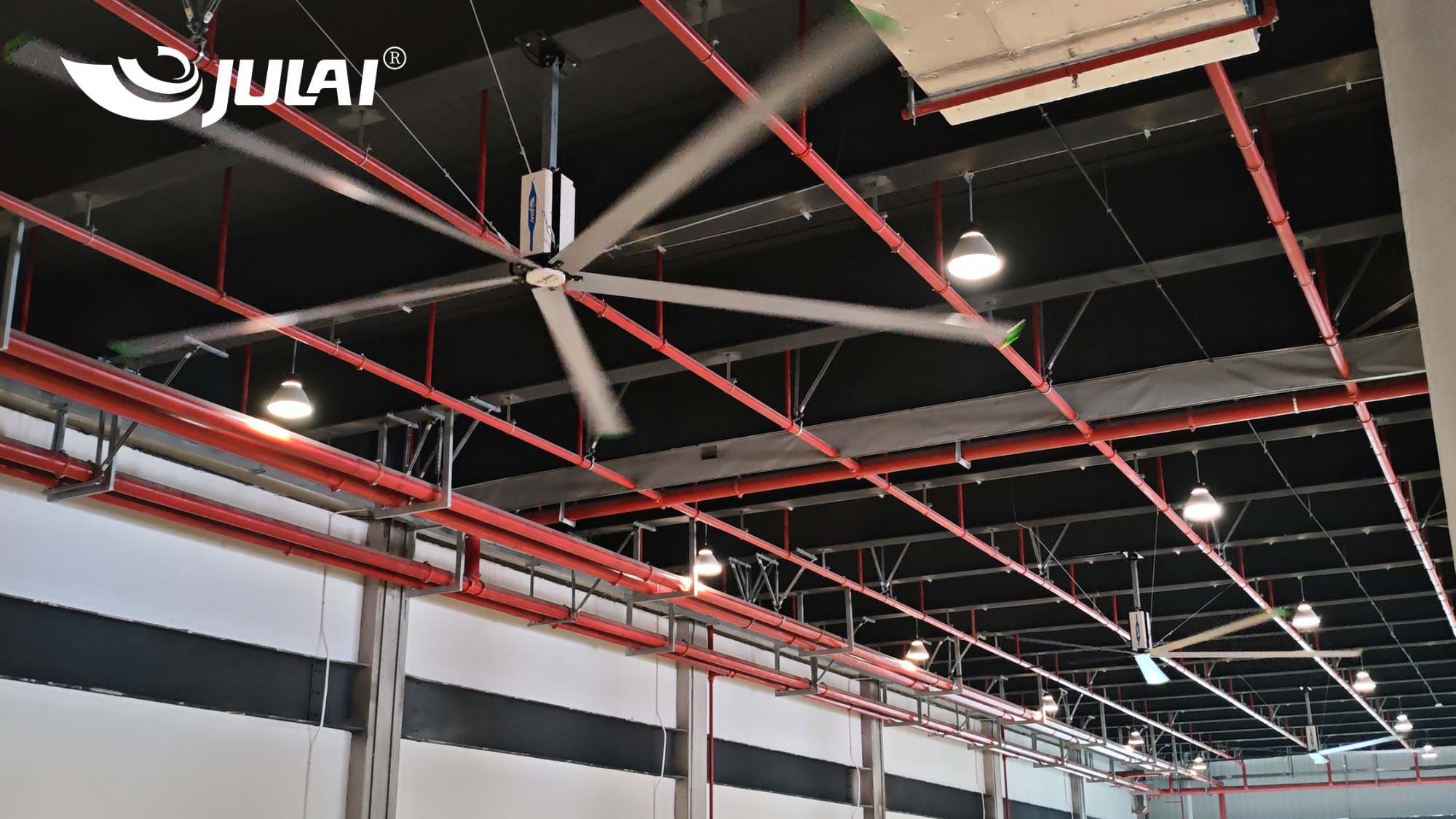
The operating conditions have a direct impact on energy consumption. The rotational speed of the fan is the core variable, and energy consumption is proportional to the cube of the rotational speed. Energy consumption is significantly reduced when operating at low speeds. Meanwhile, the rationality of operating time and the frequency of start-stop also affect the total energy consumption. Frequent start-stop operations will increase instantaneous energy consumption losses. In addition, the design and cleanliness of the fan blades also indirectly affect the motor load. Poor aerodynamic design of the blades or excessive dust accumulation will increase resistance and cause the motor load to rise.
The operating environment is also an important factor that cannot be ignored. High temperatures and high humidity can reduce the efficiency of the motor's heat dissipation, leading to an increase in internal losses; while excessive obstacles in the workshop can disrupt the airflow, increasing the resistance of the motor during operation.
Therefore, choosing high-efficiency motors, optimizing operating parameters, maintaining equipment cleanliness, and improving the operating environment are key measures to reduce the energy consumption of industrial large fan motors.
 Julai to Attend the 140th Canton Fair — HVLS Large Ceiling Fans for Energy‑Saving Ventilation
 JULAI to Attend the 23rd China-ASEAN Expo | Sincere Invitation to Global Partners
 Industrial Large Fans: The Practical Choice for Factory Ventilation and Cooling
 Why are super-large industrial fans chosen for cooling in large-scale spaces?

 English
  日本語
日本語  Deutsch
  Français
  Español
  Русский
  Português
  繁體中文
繁體中文  Italiano
  한국어
한국어  ဗမာ
ဗမာ  ไทย
ไทย  Tiếng Việt
  Ελληνικά
  नहीं।
नहीं। 

